Ports of the world
Aerial footage of ports and waterways — rushes available for licensing
Since antiquity, ports have been the lungs of world trade. Seen from the air, they reveal a reality the ground cannot convey: the colossal scale of modern infrastructure, the permanent choreography of ships, cranes and containers, and sometimes the surprising coexistence of industrial giants and the most rudimentary craft.
Our collection covers ports on four continents — from the world's largest container terminals to the most remote river ports of central Africa, through ship-breaking yards and the great artificial maritime waterways.
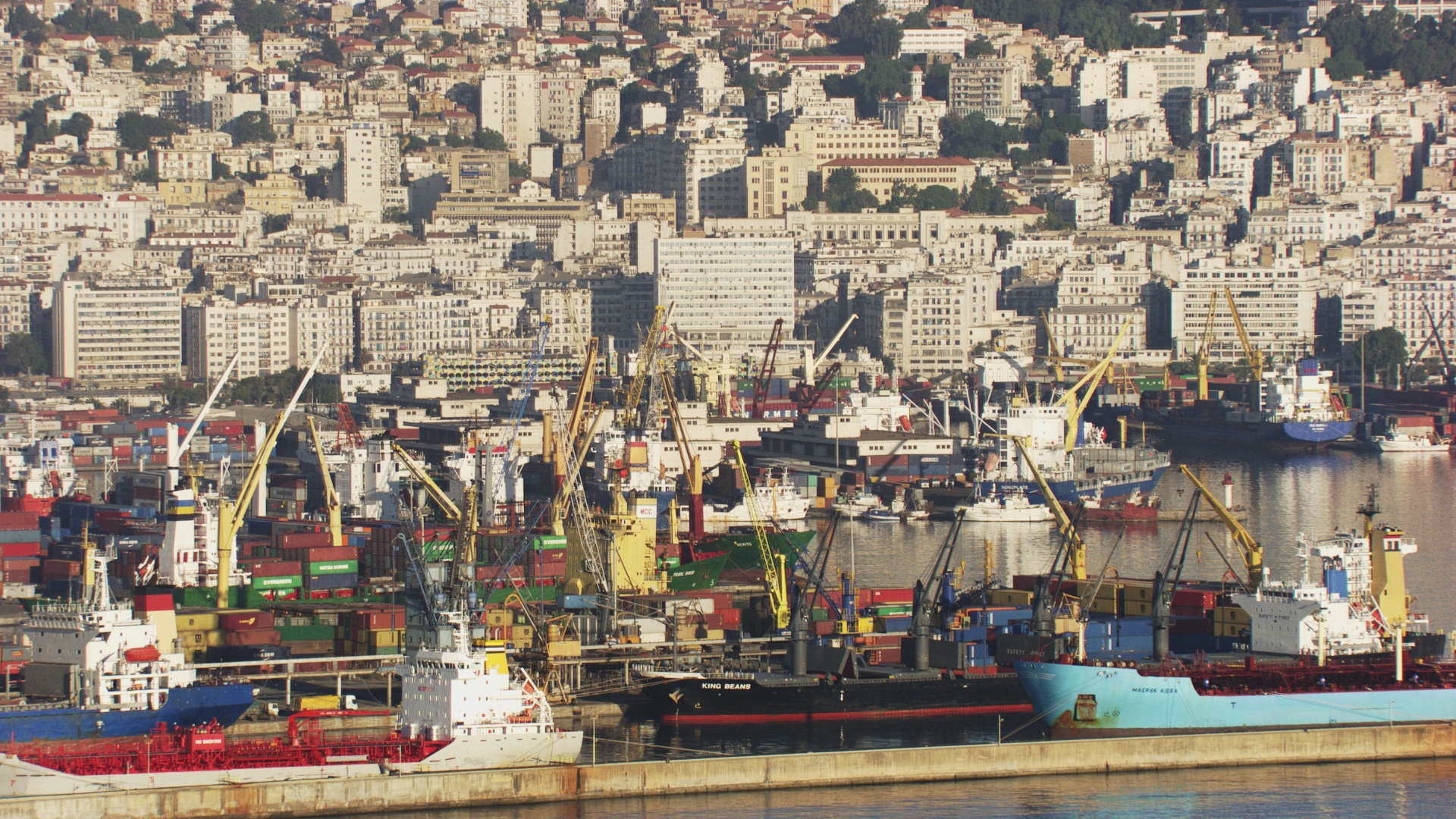
Algiers and Béjaïa, Algeria — The port of Algiers, Algeria's leading port infrastructure, and the port of Béjaïa, the country's main oil and gas terminal, seen from the air in their Mediterranean urban setting.
Marseille, France — France's largest port and the fifth-largest in the Mediterranean, the Grand Port Maritime de Marseille spreads from the air its industrial basins, container terminals and oil depots, backed against the city and the calanques.
Hamburg, Germany — One of the largest ports in Northern Europe, Hamburg seen from the air reveals its exceptional port architecture — historic Speicherstadt warehouses and ultra-modern terminals side by side on the banks of the Elbe.
Yangshan, China — The port of Yangshan, Shanghai's deepwater container terminal built on an artificial island connected to the mainland by the world's longest sea bridge, is one of the busiest container ports on the planet. Seen from the air, the accumulation of colourful containers stretching to the horizon is one of the most striking industrial spectacles in our collection.
Fremantle, Australia — Perth's historic port in Western Australia, Fremantle blends from the air industrial infrastructure and a vibrant waterfront, at the mouth of the Swan River.
Dhaka — Sadarghat and Amin Bazar, Bangladesh — On the banks of the Buriganga, the river port of Sadarghat in Dhaka is one of the world's largest river ports — a frantic activity of ferries, rowing boats and craft of every kind in a traffic of staggering density. Upstream, Amin Bazar offers a more rural face of the same river.
Chittagong, Bangladesh — Bangladesh's main seaport, Chittagong is also the site of one of the world's largest ship-breaking industries — supertankers and container ships beached on the sandy shores and dismantled by hand by thousands of workers. Our footage echoes our similar collection on the Gadani yards in Pakistan.
Karachi and Gadani, Pakistan — The port of Karachi, Pakistan's leading port, and the Gadani ship-breaking yards on the Balochistan coast — one of the three largest ship demolition sites in the world, where ocean giants are turned into scrap metal on the shores of the Arabian Sea.
Suez Canal, Egypt — Inaugurated in 1869, the Suez Canal links the Mediterranean to the Red Sea over 193 kilometres, sparing ships the journey around Africa. Seen from the air, the convoy of ocean giants progressing through this ribbon of water cutting across the Egyptian desert is one of the most striking images of world trade.
Panama Canal — A UNESCO World Heritage Site, the Panama Canal and its locks seen from the air reveal the scale of this engineering feat built between 1904 and 1914 — giant vessels crossing the isthmus between two oceans, raised and lowered by the waters of Lake Gatun.
Oyo and Brazzaville, Republic of Congo — On the Congo River and its tributaries, river ports of a radically different kind: Oyo and Brazzaville, where the immense overloaded barges that travel upriver for weeks, laden with goods, animals and passengers, come to moor.
Concepción, Chile — The port of Concepción, in the Gulf of Arauco, is one of the main fishing and export ports of central Chile — sardine boats, industrial terminals and the waters of the South Pacific filmed from the air.